


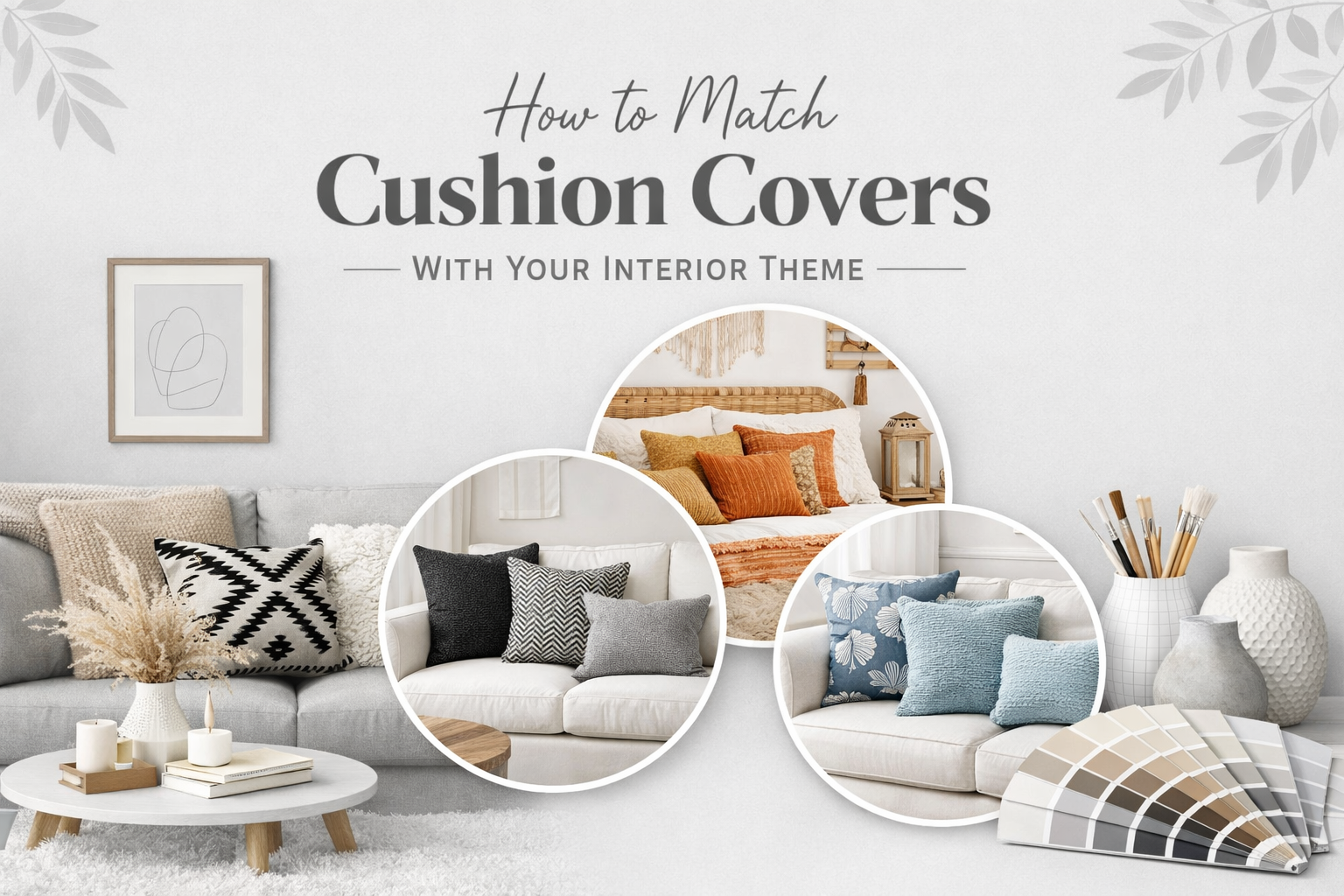
Introduction:
Choosing the right cushion covers can completely transform your living space. While sofas and furniture form the base of your room, cushion covers add personality, warmth, and style. Interior designers often say that soft furnishings like cushion covers are one of the easiest and most affordable ways to refresh a space.
According to a 2024 home décor trends report, nearly 64% of homeowners update soft furnishings every 12–18 months instead of replacing furniture. Cushion covers are popular because they are affordable, easy to change, and available in many colors, textures, and patterns.
But how do you match cushion covers with your interior theme? Should you follow a color palette? Can you mix patterns? Do minimalist homes need printed cushion covers?
This guide explains everything in simple, practical language so you can confidently choose cushion covers that match your home style.
Table of Contents
Start With Your Color Palette
Before buying cushion covers, understand your room’s color palette. A color palette includes the main shades used in your walls, sofa, curtains, and décor accessories.
Interior experts recommend following the 60-30-10 rule:
- 60% dominant color (walls, large furniture)
- 30% secondary color (curtains, rugs)
- 10% accent color (cushion covers, décor pieces)
Cushion covers usually fall into the 10% accent category. This means they can either:
- Match existing colors for a calm look
- Add contrast for a bold statement
How to Choose Cushion Covers Based on Color
1. Matching Tone-on-Tone
Choose cushion covers in the same color family as your sofa for a sophisticated look.
2. Complementary Colors
If your sofa is neutral (beige, grey, white), use bright cushion covers like mustard, teal, or rust to add energy.
3. Seasonal Color Changes
Light pastel cushion covers for summer and deep shades like maroon or emerald for winter.
Studies show that homes using coordinated color palettes appear 30% more visually balanced, according to interior styling surveys. Choosing cushion covers based on color palette ensures harmony and elegance in your space.
Master the Art of Pattern Mixing
Many people hesitate to mix patterns when selecting cushion covers. However, pattern mixing can make your room look stylish and designer-inspired if done correctly.
Simple Pattern Mixing Formula
Follow the “Rule of Three”:
- One large-scale pattern
- One medium pattern
- One small or subtle print
For example:
- Floral cushion covers (large pattern)
- Striped cushion covers (medium pattern)
- Solid color cushion covers (small or neutral base)
Keep One Element Consistent
To avoid visual clutter:
- Keep colors consistent across patterns
- Stick to one theme (geometric, floral, abstract)
- Avoid mixing too many bold designs
Interior décor reports show that balanced pattern mixing increases perceived style value by 25%, making spaces look curated rather than random.
Pattern mixing allows cushion covers to become statement pieces rather than just accessories.
Match Cushion Covers with Popular Interior Themes
Your interior theme plays a major role in choosing the right cushion covers. Let’s explore how to match them correctly.
Minimalist Décor
Minimalist homes focus on simplicity, neutral shades, and clean lines. In such spaces, cushion covers should enhance calmness without overwhelming the room.
Best Cushion Cover Choices for Minimalist Décor:
Simple geometric prints
Solid neutral shades (white, beige, grey)
Subtle textures like linen or cotton
Avoid heavy prints or too many colors. Research shows that minimalist interiors reduce visual stress and create a feeling of spaciousness.
Boho Style Interiors
Boho interiors are creative, colorful, and layered. Here, cushion covers can be bold and expressive.
Best Cushion Cover Choices for Boho Style:
- Ethnic prints
- Embroidered patterns
- Bright colors and tassels
- Mixed textures
Boho style cushions allow freedom in pattern mixing. Layer different sizes and shapes for a relaxed look.
Modern Contemporary Homes
Modern homes balance simplicity and bold design elements.
Best Cushion Cover Choices:
- Abstract prints
- Monochrome shades
- Metallic accents
- Structured patterns
Contemporary interiors benefit from cushion covers that act as focal points.
Fabric Matters: Comfort and Durability
While style is important, fabric choice also affects performance. Good cushion covers should be:
- Durable
- Easy to wash
- Comfortable
- Fade-resistant
Cotton cushion covers are breathable and ideal for daily use. Velvet cushion covers add luxury. Polyester blends resist wrinkles and last longer.
According to consumer data, 72% of buyers prefer machine-washable cushion covers for convenience.
Choosing the right fabric ensures your cushion covers look good and last longer.
Size and Arrangement Tips
Matching cushion covers is not only about color and pattern. Size and arrangement also matter.
Cushion Styling Formula
- For 3-seater sofa: 5 cushion covers
- For 2-seater sofa: 4 cushion covers
- Mix square and rectangular shapes
- Layer larger cushions at the back
Arranging cushion covers properly makes the sofa look fuller and more inviting.
Common Mistakes to Avoid
When buying cushion covers, avoid these mistakes:
- Ignoring room color palette
- Choosing too many bold patterns
- Not checking fabric quality
- Buying the wrong size
- Overcrowding the sofa
Keeping design balanced ensures cushion covers enhance your décor instead of overpowering it.
Why Cushion Covers Are a Smart Home Upgrade
Cushion covers are affordable compared to changing furniture. They allow quick updates without heavy investment. Interior surveys show that updating soft furnishings increases room satisfaction by 40%, making homeowners feel their space is refreshed.
With the right cushion covers, you can:
Follow décor trends
Highlight your interior theme
Add comfort
Introduce new colors
Refresh your living space anytime.
Conclusion
Matching cushion covers with your interior theme is simple when you understand color palette, pattern mixing, and style alignment. Whether your home follows minimalist décor, boho style, or modern design, the right cushion covers can transform your space instantly.
They are affordable, easy to replace, and powerful enough to refresh your living room without buying new furniture. By selecting cushion covers based on color harmony, balanced patterns, and suitable fabrics, you can create a well-designed and inviting home.
Investing in high-quality cushion covers is not just about decoration—it is about expressing your personal style while maintaining comfort and practicality.
How do I match cushion covers with my sofa color?
Choose cushion covers in complementary or accent shades from your room’s color palette.
Can I mix patterns in cushion covers?
Yes. Follow the rule of three patterns and keep colors consistent.
Which fabric is best for cushion covers?
Cotton cushion covers are breathable and durable for daily use.
How many cushion covers should I use on a sofa?
Use 4–5 cushion covers for a balanced look on a standard sofa.
Are bright cushion covers suitable for minimalist décor?
Minimalist décor usually prefers neutral or subtle cushion covers.
How often should I change cushion covers?
You can change cushion covers seasonally or every 12 months for a fresh look.